
Plausible impossibilities, implausible possibilities, and space for grace in poetics
thinking about Aristotle and being true to the fullness of reality in fiction

New writing has taken a back-burner to some other activities in life lately, but I’m taking a moment to share some thoughts on my man Aristotle and the art of fiction.
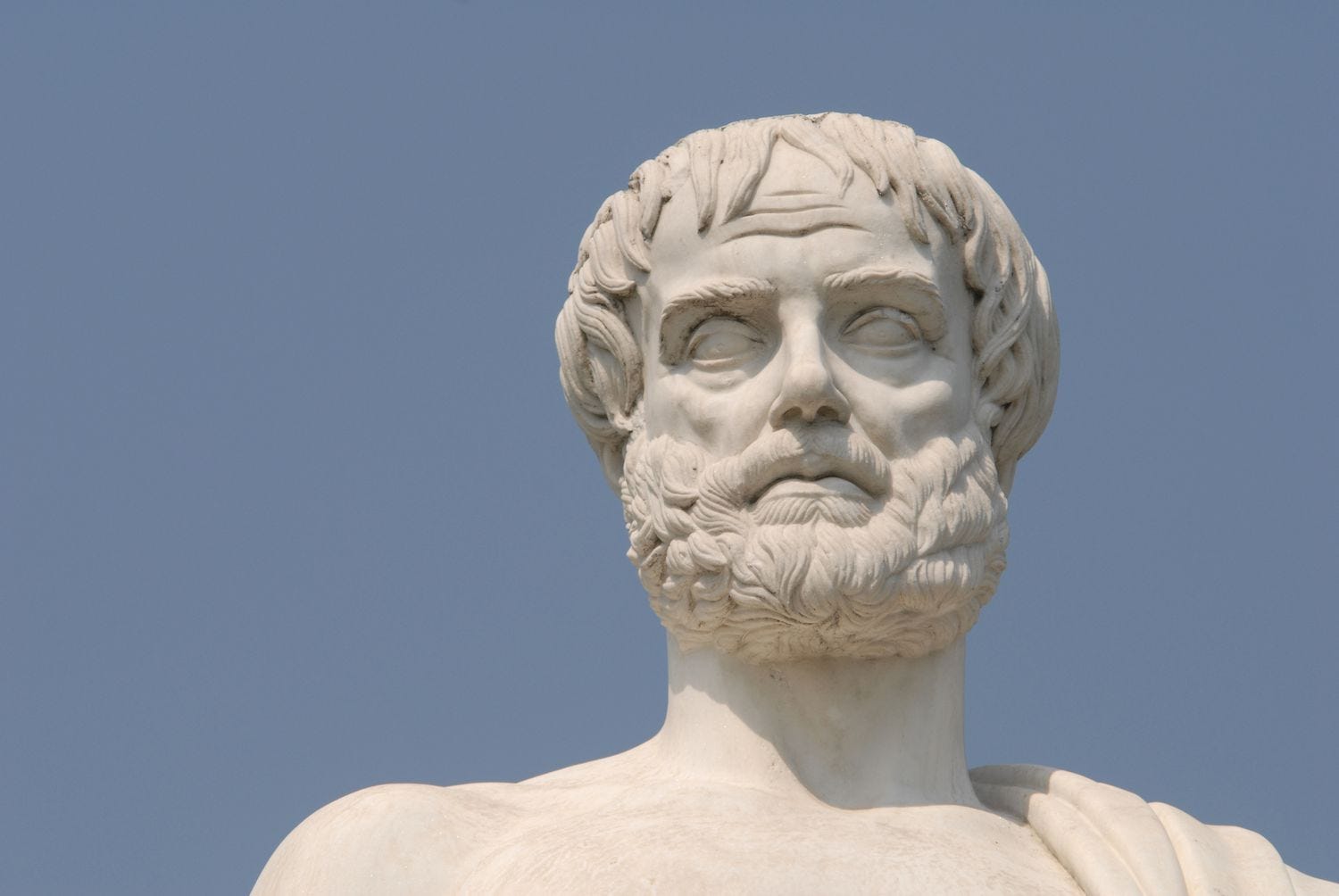
In his Poetics, Aristotle argues that “The needs of poetry make what is plausible though impossible preferable to what is possible but implausible…. Implausibilities should…be justified by their conformity to prevalent opinion.” Elsewhere in the Poetics, he makes a similar argument about the probable, writing that “the poet’s job is not relating what actually happened, but rather the kinds of things that would happen—that is to say, what is possible in terms of probability and necessity.” In these passages, Aristotle posits an idea about narrative, mimetic art that can be understood in at least three different ways: favoring popular credulity or opinion over truth; paving the way for a strictly materialist realism; or, emphasizing the artistic need for consistency within a work. Two of these interpretations lead to limited visions of what fiction, drama, or narrative poetry should do; the third is instructive for the writer of fiction or narrative poetry.
One part of Aristotle’s argument that stands out with potential for misapplication is the idea that “implausibilities should…be justified by their conformity to prevalent opinion.” A positive reading of this line would be that a writer needs to know his audience and write what will make them feel the emotion or give them the experience that he desires. Horace argues along these lines when he writes in The Art of Poetry that a poem’s “language must so persuade the listener / And act upon his soul that he’ll respond / As the poem intends.” In a less positive interpretation, Aristotle’s deference to “prevalent opinion” sounds exactly like the pandering to the audience that he decries in another passage of the Poetics. In this interpretation, Aristotle’s view of the plausible sounds like Socrates’s description of rhetoric in Plato’s Phaedrus. There, Socrates argues,
…one who intends to be an able rhetorician has no need to know the truth about the things that are just or good or yet about the people who are such either by nature or upbringing…. They only care about what is convincing. This is called “the likely,” and that is what a man who intends to speak according to art should concentrate on. Sometimes, in fact…you must not even say what actually happened, if it was not likely to have happened—you must say something that is likely instead.
What is “likely” in Plato sounds like what, to Aristotle, “conforms to prevalent opinion.” And while Socrates argues that this is a flaw in rhetoricians that proves they do not have knowledge, Aristotle argues that the poet should in fact write in this way, because that is what will convince the audience. And to be honest, there’s an uncomfortable way in which, practically, he’s right. There have been times that I’ve written an experience into a story only for a reader not to believe it; or I’ve altered a fact in a fictional account of a story because the reality seemed too unbelievable. There is a reason that fact is stranger than fiction remains such a popular cliche.
On the whole, though, the problem with this conformity to prevalent opinion is that it sacrifices truth to pander to the audience and what they will believe—even if what they are more likely to believe is not a true vision of reality, not only in small details, but regarding an overarching vision of what is true. Truth no longer matters in this view as much as whatever will be effective and believed by the audience. Taken to its end, the audience and popular opinion have the power to undermine art, dictating what can be written and what thoughts are allowable.
This perversely democratic, stunted vision of truth and art leads to a second interpretation of Aristotle’s plausible. In an increasingly post-Christian milieu, a dominant strain of realism emerges that treats anything spiritual or theological as “implausible,” and considers only what is material and observable as “plausible.”1
Prevalent opinion in the twenty-first century frequently does not consider the workings of the Divine in everyday life as plausible. While I don’t think Aristotle was arguing for this interpretation of his work, the idea of prevalent opinion, viewed in a society whose prevalent opinion is divorced from reality, leads to a loss of the spiritual and theological in narrative works. One result of this is that too often readers are distrustful of works that attempt to acknowledge spiritual realities or plumb truth that goes beyond the material, concrete world, and we are left with a slavish, materialist realism that doesn’t allow for the action of grace. The “realist” cuts out the experience of the spiritual, regardless of its truth, because the concrete, materialist vision of reality is plausible in the zeitgeist of the culture; or, if not actually intellectually plausible, it is at least an implausibility that conforms to accepted prevalent opinion.
The critic James Wood cites Aristotle’s usage of the plausible in an interpretation that bridges this second, reductively “realist” view, and the third, instructively artistic interpretation. In How Fiction Works, Wood writes,
Hypothetical plausibility—probability—is the important and neglected idea here: probability involves the defense of the credible imagination against the incredible. This is surely why Aristotle writes that a convincing impossibility in mimesis is always preferable to an unconvincing possibility…it is the artist’s task to convince us that this could have happened. Internal consistency and plausibility then become more important than referential rectitude.
Wood echoes Aristotle’s and Horace’s arguments that the writer’s task is to convince his reader, and whatever tactics will attain that end are acceptable and profitable. The writer can and ought to convince his audience of an “impossibility” if that impossibility will illustrate a truth. Wood writes, “Once we throw the term ‘realism’ overboard, we can account for the ways in which, say, Kafka’s Metamorphosis and Hamsun’s Hunger and Beckett’s Endgame are not representations of likely or typical human activities but are nevertheless harrowingly truthful texts.” For Wood, the impossible doesn’t have to contradict the Truth. The true impossibility of a story can justify itself if it is presented with proper artifice, convincingly, and at the service of a deeper truth. But note that Wood does not allow for this internal truth of the story to be reflective of spiritual reality as it actually functions. He is speaking of a symbolic truth of the supernatural, rather than a supernatural truth transcribed from reality to the page.
This use of the “impossible” as Wood describes it to serve a deeper reality is, though, an important truth that we can pull from Aristotle’s argument about plausibility. One of the ways of functionally using and understanding “impossibility at the service of Truth” is self-consistency within a story. To get at the truth, we may tell a story that is not possible as written or that contains elements of the impossible. That story, though, must have its own rules and consistencies. Within the world of the story, rules that have been established must be followed. Actions must have their appropriate consequences, even if the initiating actions and their consequences are impossibilities within the real world. This interpretation not only allows for myth and fairy tales but argues for their value. Myths, constructed of what in the real world we would describe as “impossible,” are full of truths that pertain to real human nature, our interactions with each other, and our conceptions of the Divine.
Plato uses myth in this way when he describes the human soul in the Phaedrus. One contemporary author that writes in this realm of wide-open possibility is Brian Doyle, specifically in his novel Mink River. Doyle’s novel includes, with full-face sincerity, a talking crow named Moses, the inner thoughts of a mother bear as she sees a young boy crash his bicycle, the observations of a nun after she has died, and the musing thoughts of a flowing river. Doyle makes his expansive vision of consciousness believable within the context of the novel because of its consistency and artifice, and through that he forces his readers to consider reality with a depth and vision that we otherwise may not. He challenges us to see creation as Brother Sun and Sister Moon.
Aristotle’s argument about “implausible possibilities” seems most fitted to this final understanding, that the world and rules of the story must be consistent and cannot be violated, because that is what will convince the audience. The audience must believe that what happens in the story would happen in this story, even if not in their everyday lives. This is a solid artistic principle for artists to follow, and one that still allows for myth and fantasy.
However, this interpretation does not fully explain the possible interpretations and misapplications of the Poetics, and even if Aristotle did not intend to open the door to a slavishly materialist realism, he did allow for the artist to sacrifice truth if necessary for the sake of prevalent opinion and the audience’s credulity. This sacrifice, applied in a culture that doesn’t allow for the Divine, that believes what is false and rejects what is true, has the condemnable consequence of a stunted vision of reality and a narrow realism that treats the real only as the visible or explainable, shutting off an entire spiritual and mystical realm of experience. The true artist’s task is never to betray truth, even if prevalent opinion has turned against it, but to write in a way that strikes at the anamnestic knowledge of Truth in each person.
Odds and Ends
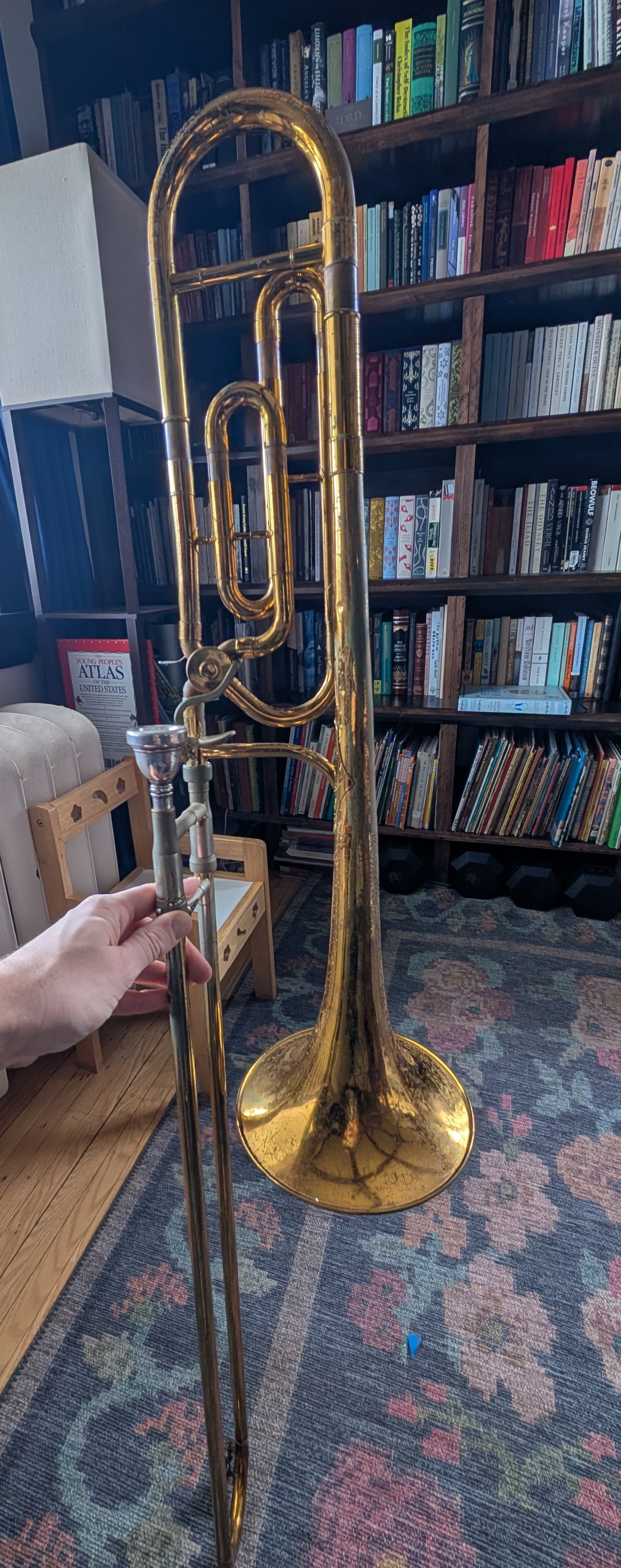
For those of you who read my update a while back about getting a new 1955 trombone, I’m happy to share that I’ve gotten to play a few gigs on it and I’m in love. It pops, it sings, it responds to the slightest touch of air. It looks grizzled and used and well worn in, a reminder of all the years and players it’s seen. Chef’s kiss.
I gave an online reading of a couple of stories from my new collection as part of the Thomist Poet series. You can watch the recording of it here.
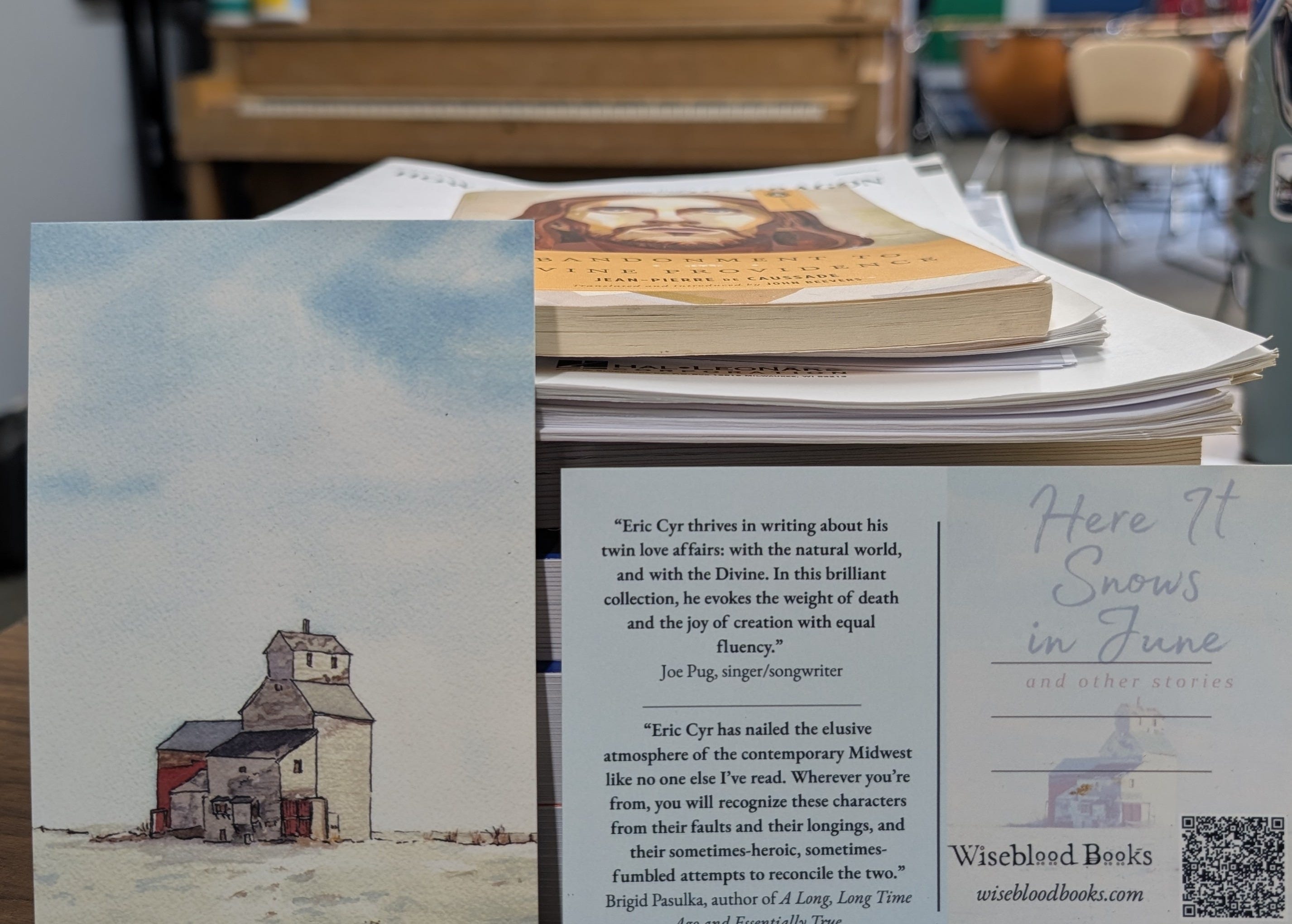
My truly wonderful creative watercolor artist friend Sam Nielsen did a painting of the cover image used on my forthcoming book, and I made some promotional postcards that also double as lovely mini art prints. The image brings me straight to the open fields of southern Minnesota and captures so much of the feel of the stories. I will happily mail one to you if you send me your address.
That’s all for now, folks.
Without fundamentally changing my argument, I would add that this materialist view does allow for the inner workings of man’s mind and consciousness as part of that “material.” Where it falls short is attributing consciousness solely to matter itself.